Hyogo · 4 min read · English
Kobe Manhole Covers: Port Stories, Kitano and a New Hydrant Card
A weathercock, a harbor and the neighborhood stories hidden in public infrastructure.
Listen to the guide
Press Listen to play the guide.
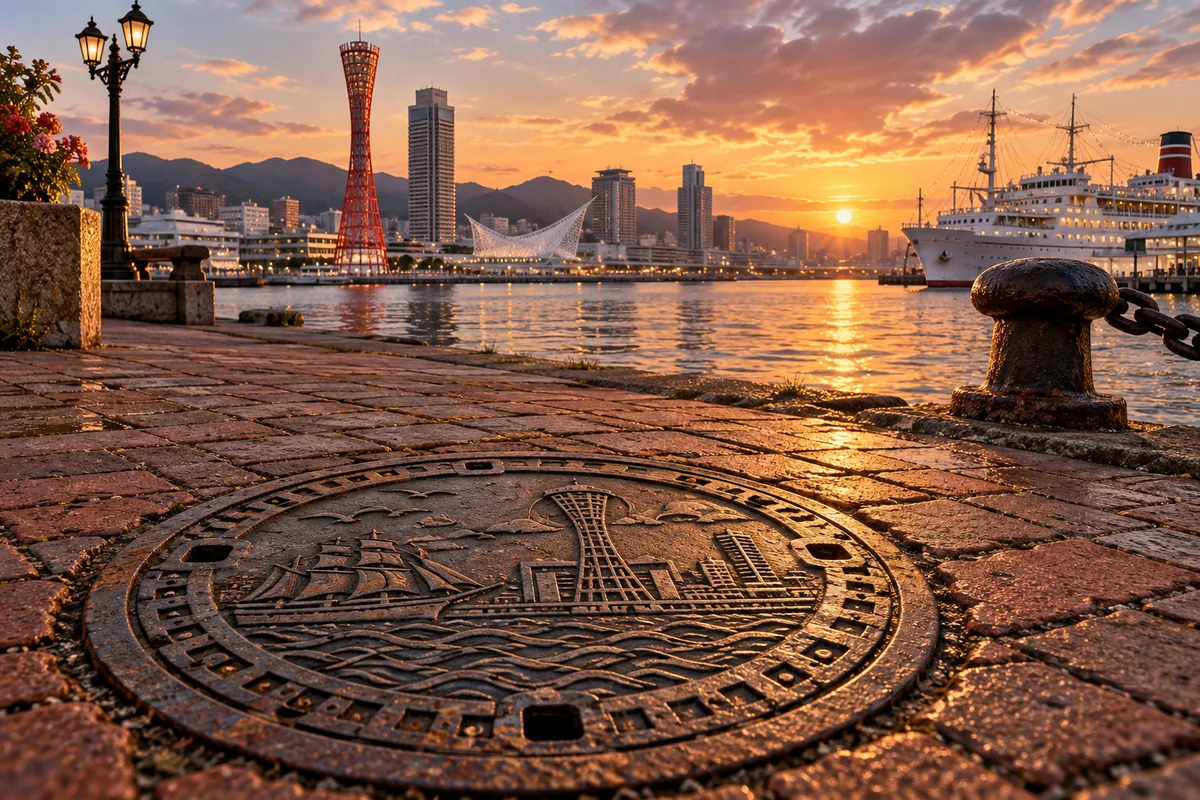
Download MP3 · 3.5 MBKobe’s decorative covers connect port imagery and neighborhood identity. A new physical card joined the collection on July 31, 2026: the city’s first hydrant-cover Manhole Card, distributed at Kitano Tourist Information. The artwork itself is older than the card.
The city in a small circle
A cover has very little space to explain a place. It needs a few images that someone can recognize quickly, then enough detail to reward a longer look. Kobe’s designs offer a good invitation to that kind of reading: look at the picture first, then ask what part of the city it has chosen to represent.
The hydrant design behind the new card was selected through a public call in 1990. It includes a weathercock and Kobe’s port. The city explains that the older shape was square, with circular versions introduced during replacements from 2019. A new souvenir can therefore point to a much longer story in the street.
Collecting the Kitano card
The city’s July 2026 announcement places distribution at Kitano Tourist Information, 3-10-20 Kitanocho, Chuo Ward. Published hours are 9 a.m. to 6 p.m. from March through October and 9 a.m. to 5 p.m. from November through February, with closure on December 31 and January 1.
The card is free, one per person attending in person; the city does not offer reservations, holding or mailing. Recheck current service and stock before a dedicated journey. Put the staffed counter into the part of your day with fixed hours, then leave the more flexible street discoveries around it.
Why a hydrant belongs in this collection
Not every decorated metal lid serves the same utility. A hydrant cover belongs to the water-supply and fire-response system; it should not be casually relabeled as a sewer cover because it is round and illustrated. Learning that distinction adds something useful to the pleasure of finding it.
Look for the lettering as well as the central image. It can explain what lies below or which public service maintains the object. Taking a close photograph of those words gives you something to investigate later, especially when an unfamiliar Japanese term appears repeatedly on your walks.
Choose one neighborhood story
Kobe’s official design directory brings together city themes and district-specific artwork. It describes public design contests running since fiscal 2016 and links installation maps for the winners. Subjects range across different parts of the city, so the directory is a menu of possibilities rather than a single walking itinerary.
Start with the neighborhood you already intend to visit. Find its nearby designs on the municipal map and choose two or three that make an interesting comparison. One might emphasize a view; another a local building or flower. The useful question is what the designer selected, and what you can recognize around you after seeing it.
Keep the map and the artwork in conversation
A picture of a port or landmark does not prove the cover is directly beside it. Use the installation marker for the actual location, then decide whether visiting the subject fits your day. This keeps an attractive theme from becoming an unexpectedly long detour.
For a personal record, write down one detail the cover made you notice. It could be as simple as a shape repeated on a building, or a place name you had not encountered before. Those observations turn a few street photographs into a small, memorable introduction to Kobe.
Official and primary sources
Open the current source before travel. These links support the guide; they do not imply affiliation or permission to reproduce official images.
Questions
Does the new card mean the hydrant artwork was created in 2026?
No. The card is new; the city traces the artwork to an earlier public design selection.
Can I follow every Kobe design on one short walk?
The municipal directory covers different districts. Select a local cluster and check its installation map first.
Should I go to the landmark pictured on a cover to find it?
Use the official installation marker. An illustrated landmark is design context, not necessarily the cover’s physical address.
Related guides
A souvenir with a story
Find the right counter, understand the coordinates and bring home more than a photograph.
Read & listen
The stories beneath your feet
Discover the local identity behind Japan’s everyday public art.
Read & listen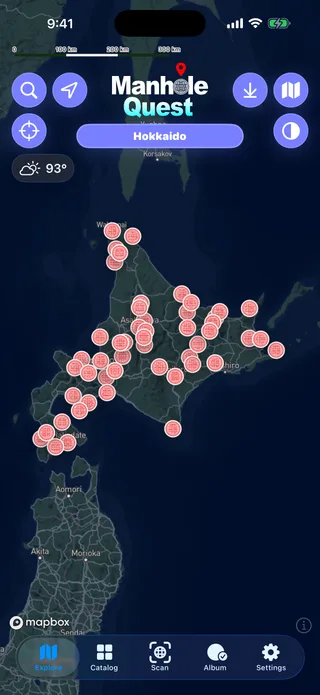
Your first cover walk
Find a small cluster, check the sources, and turn a map into a good day out.
Read & listenPlan the route in Manhole Quest
Use the map, official source links, supported offline areas, and on-site scanning to turn the guide into a practical walk.
 Browse all guides