Design stories · 4 min read · English
How to Read Tokyo’s Cherry-Blossom Manhole Cover
Flowers, leaves and birds turn an everyday cover into a small lesson in the city’s identity.

Listen to the guide
Press Listen to play the guide.
Download MP3 · 3.6 MBTokyo’s familiar sewer cover combines the metropolis’s flower, tree and bird: Somei-yoshino cherry blossom, ginkgo leaves and black-headed gulls. Look closely and the decorative pattern becomes a compact portrait of Tokyo.
Start at the center and work outward
There is a particular pleasure in recognizing something you have already walked past. The pattern was there; you simply did not yet have the vocabulary for it. Tokyo’s cherry-blossom cover is a good place to begin learning that vocabulary, because its decorative pieces have a clear local meaning.
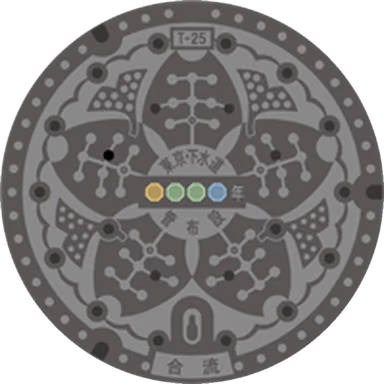
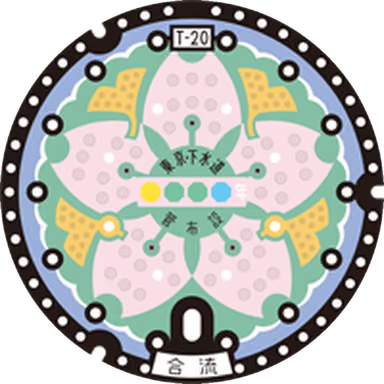
The Sewerage Bureau identifies a large central cherry flower, four ginkgo leaves tucked between its petals, and gulls around the outside. Once you know what to look for, the circle is easier to read: start with the flower, find the leaves, then follow the birds around the rim.
Three emblems with their own histories
Tokyo’s official symbol history names Somei-yoshino as the metropolitan flower, formally selected in 1984. Ginkgo became the metropolitan tree in 1966 after a public vote, and the black-headed gull was designated the residents’ bird in 1965. The cover brings those separate civic choices into one composition.
That combination gives you a useful way to think about the artwork. Rather than treating the shapes as a general floral pattern, ask what makes each one recognizable. The fan-shaped leaf and the repeated bird silhouettes reward a slower look. You do not need botanical expertise to start noticing how much identity can fit into such a small space.
Count the birds, then look for the caps
There are variations. The bureau’s older design has thirteen gulls; the model introduced in 2000 has twelve and includes identification caps at the center. In the management system described by the bureau, three caps on the left identify the location and one on the right identifies the installation year.
Those little inserts are a reminder that you are looking at a working object. A pleasing composition and an administrative function share the same surface. We would not try to decode an unfamiliar cap from appearance alone: the official explanation establishes what the positions mean, not a complete visitor’s key to every possible character.
A close-looking exercise for your next walk
You can repeat the same exercise with a different town’s cover later. Begin with observation, look up the official explanation, then compare the two. That habit leaves room for surprise while keeping a guessed meaning separate from the designer’s documented intention.
- Find a matching cover from a safe place on the pavement, then compare it with the bureau’s official design photographs.
- Trace the composition with your eyes: central flower, leaves, outer ring. Notice which shapes are easiest to recognize without color.
- Count the birds and look for the center inserts. Record what you can actually see instead of assuming all versions are identical.
- Take a photograph that preserves the whole circular design. Add a short note about the feature that helped you identify it.
Color adds another way to see it
The bureau also documents a colored version produced in 2017, based on the 2000 model. Color helps separate the motifs, but the underlying arrangement is worth studying in plain metal too.
For a visitor, this is an easy kind of discovery to carry into an ordinary day. There is no need to organize an entire trip around a familiar pattern. Learn it once, then see whether you recognize it while going somewhere else. A piece of Tokyo that once passed unnoticed can become a small, repeated greeting.
Official and primary sources
Open the current source before travel. These links support the guide; they do not imply affiliation or permission to reproduce official images.
Questions
Are all Tokyo manhole covers the same?
No. This article explains a particular sewer-cover design and its documented variations, not every utility cover in Tokyo.
Can I decode every central marking from this guide?
No. The bureau explains the role of the cap positions; this article does not supply a complete code lookup.
Do I need to find a colored version to recognize the design?
No. Compare the shapes and layout with the official photographs; the composition can also be studied in plain metal.
Related guides
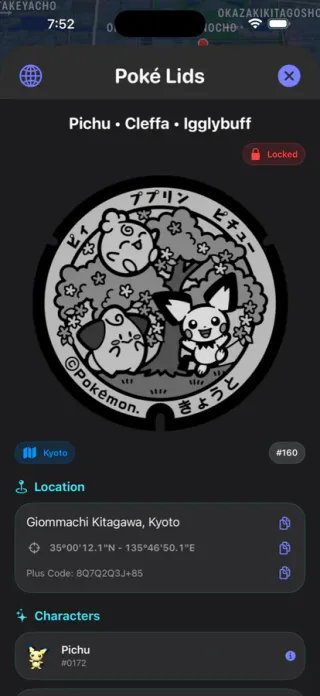
Tokyo, one neighborhood at a time
Build a short station-to-station walk with room for discoveries.
Read & listen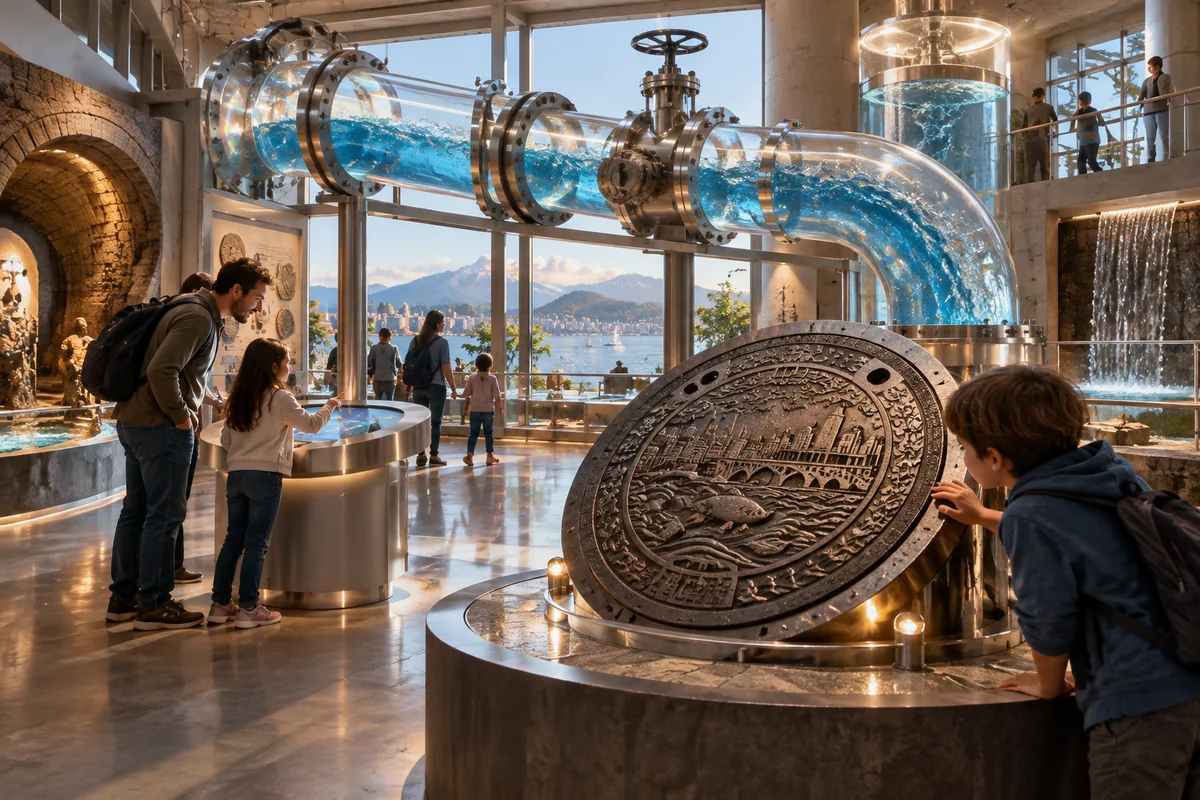
The city beneath the city
A free Ariake museum turns hidden pipes, flowing water and everyday engineering into a family visit.
Read & listen
The stories beneath your feet
Discover the local identity behind Japan’s everyday public art.
Read & listenPlan the route in Manhole Quest
Use the map, official source links, supported offline areas, and on-site scanning to turn the guide into a practical walk.
 Browse all guides